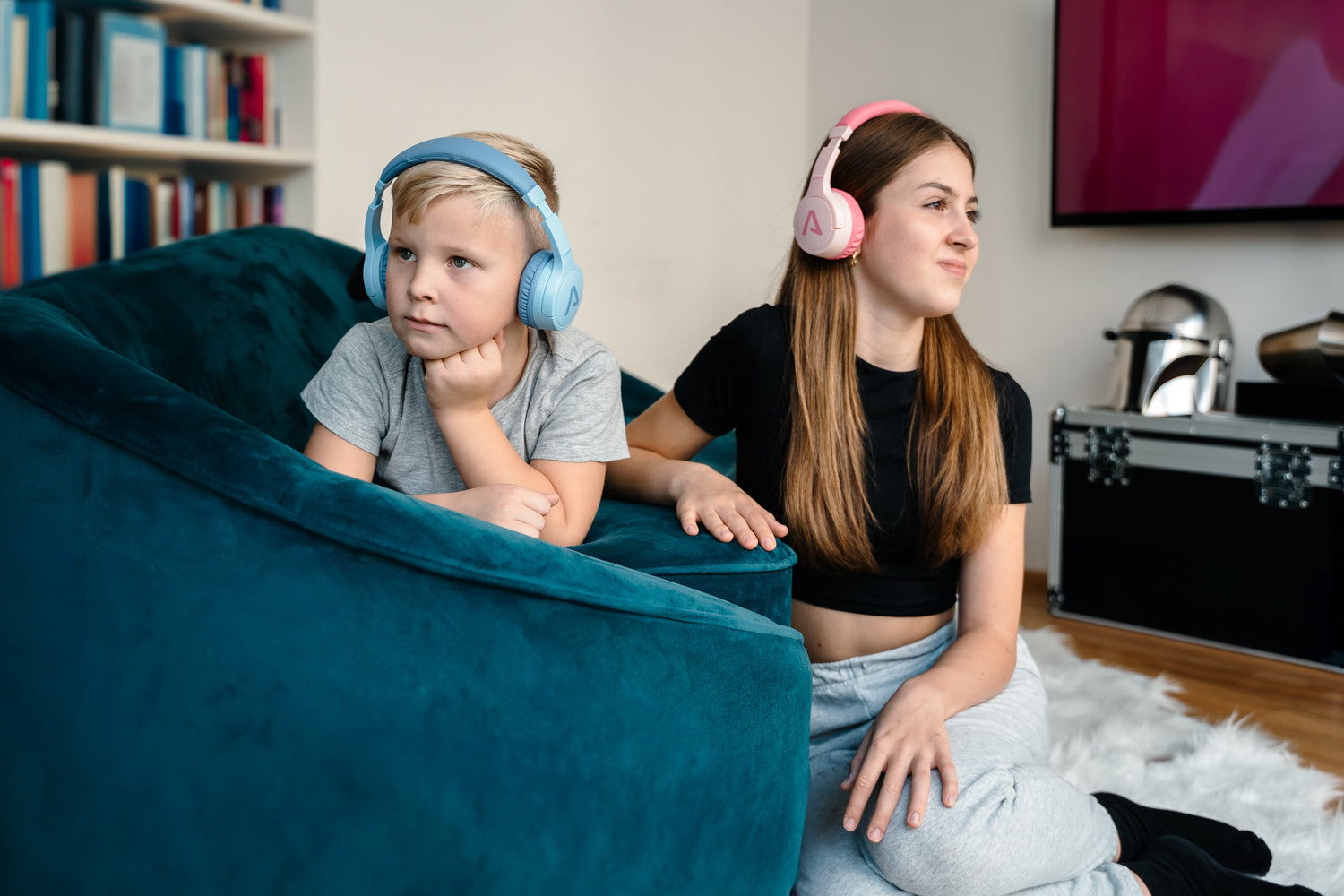
Children today listen to more sounds than ever before. Tablets with cartoons, YouTube, games, or music in headphones. All of this is a completely normal part of their day. And it’s not just at home. More and more parents also take their kids to concerts or festivals.
But children’s hearing is more sensitive than adult hearing. That doesn’t mean you have to take music and sound experiences away from them. It just helps to follow a few simple rules. Take a look at our tips.
Why protecting children’s hearing matters
Hearing damage doesn’t happen overnight. In many cases, it’s caused by long-term exposure to sounds that are simply too loud. And volume is something every parent should keep at least a little under control. Kids usually won’t come to you saying something is too loud and asking to turn it down. Much more fun is turning the volume all the way up.
Long-term strain on hearing can affect not only hearing itself, but also concentration or the ability to process sounds in everyday life. So it’s definitely something to keep an eye on.
When it happens most often (and parents don’t notice)
You might be surprised that risky situations are often not loud concerts. In many cases, it’s completely normal everyday moments that don’t look problematic at first. The issue is that they repeat again and again.
Do any of these sound familiar?
- a child watching cartoons with headphones before bedtime
- long car or plane trips with a tablet
- games played at maximum volume because it’s simply more fun
- sharing one device between multiple kids
- listening without breaks for an hour or even longer

A simple basic rule: the 60/60 rule
Have you heard of the 60/60 rule? It’s one of the most common ways to keep listening safe and avoid excessive volume.
The principle is simple:
- max. 60% of the volume
- about 60 minutes of listening at a time
The idea is to give ears a short break. Children’s hearing can recover and the next listening session can stay comfortable and safe.
Kids’ headphones that help control volume
Of course, rules are sometimes easier to break than follow 😊 That’s where kids’ headphones with volume limiting come in. They prevent the sound from going above a safe level, so children can listen without the risk of blasting the volume too high.
Headphones like LAMAX BaseKid1 and LAMAX SoundKid1 are designed exactly for this purpose.
Both models:
- include volume limiting for safe listening
- are comfortable even during longer use
- handle everyday use at home and on the go
- come in both pink and blue so kids can choose their favorite
LAMAX BaseKid1: A great option for wireless listening while traveling, at school, or at home.
LAMAX SoundKid1: These headphones offer a simple wired connection and easy controls that even younger children can handle.

What to look for when choosing kids’ headphones
Volume control is important, but it’s not the only thing to consider. If you’re choosing headphones for your child right now, keep an eye on a few other things too:
- comfortable fit (kids rarely use them for just 10 minutes)
- simple controls without complicated settings
- durability that can handle everyday kid use
- volume limiting as a basic safety feature
And let’s be honest. Kids don’t choose headphones based on technical specs. They choose the ones they like and the ones that feel comfortable.
How to help children build healthy listening habits
Rules and technology are helpful. But habits matter just as much. The good news is that healthy listening habits are actually quite easy to set.
For example:
- take regular breaks while listening
- don’t keep headphones on all day
- avoid maximum volume, especially in noisy environments
- balance listening time with some offline time
It’s not about banning headphones. It’s about creating a healthy balance that works in the long run.

How to recognize when something might be wrong
There are a few signs that are worth paying attention to:
- the child frequently increases the volume
- they say “I can’t hear it” even though others hear it fine
- they complain about ringing in the ears
- they become irritated or tired after longer listening sessions
That’s usually the moment to start paying attention and adjust listening habits a bit.
What About Noise Coming From Outside?
So far we have been dealing with the volume your child hears through headphones. But hearing is not threatened only by what you listen to, it is also affected by what is going on around you. Every now and then a one-off but seriously loud noise comes along, and that is handled completely differently than with the 60/60 rule.
You know how it goes. You take your child somewhere busy and suddenly you watch them flinch at every bang. Classic situations:
- fireworks or New Year's Eve firecrackers
- a concert, festival or loud summer event
- a sports match or races
- a long trip by car, train or plane
- getting your child to sleep in a noisy place you simply cannot quiet down
Volume-limiting headphones will not help you here, because the problem is not in the listening, but in the noise coming from outside. That is what noise-cancelling ear muffs are for, muffling the noise mechanically without cutting your child off from the world. And because a baby has different needs than, say, a five-year-old sidekick, it makes sense to pick the size by age.
For the very smallest there are LAMAX BabyMuffs1. The flexible headband adjusts from newborn all the way to toddler age, they are very light so they will not weigh down a little head, and the rubberized headband does not slip even during all the wriggling.
For bigger and older kids there are LAMAX KidMuffs1. The adjustable size grows with your child, the sturdy build survives drops and rougher handling, and the foldable design saves space in a backpack. You will use them not only at a concert or fireworks, but also at home or at school when your child needs quiet to concentrate.
Both versions reduce noise by up to 25 dB, are tested according to the European standard EN 352-1:2020, and work purely mechanically, with no batteries and no electronics whatsoever. They are made from hypoallergenic materials free of BPA and phthalates, so you do not have to worry about sensitive skin or your child's safety. And because they fold down into a backpack, handbag or stroller, you can keep them on you at all times and pull them out the moment the surroundings get to be too much.

Start before it becomes a problem
Protecting your child's hearing is not about spoiling their fun. Quite the opposite. It is about letting them enjoy it long term and to the MAX.
When you add a few simple habits and the right headphones for the situation, whether that means keeping the volume in check while listening or muffling noise from outside, you really do not have to worry about it at all. Your kids get to enjoy music, cartoons and games, but just as easily a concert, fireworks or a trip on holiday, all without needless risks, and you stay relaxed.