

Mobile Phones in Schools: It Is Their Use That Is Banned, Not Carrying Them

Mobile Phones in Schools: It Is Their Use That Is Banned, Not Carrying Them

In recent weeks, the media has been full of headlines about the end of mobile phones in schools. For parents of first-graders, however, this mainly creates confusion. Does the ban already apply? Does it also cover the watch your child wears so you can stay in touch on their way home? Let’s look at what the rules actually say today, what changes are being proposed and what you should check in your school’s rules so you do not have to fill in the gaps yourself. 

What Applies Today 

There is currently no nationwide ban. Since 1 January 2026, an amendment to the Education Act has allowed schools to restrict or prohibit the use of mobile phones and other electronic devices in their school or internal rules. Schools may do so, but they are not required to. The decision is up to each individual school. 

At primary schools, the school rules are approved by the school council, which also includes parent representatives. This means that the rules your child encounters at school were not created by the state. They were created by the individual school. 

Most schools already have some form of rules in place. An extraordinary survey conducted by the Ministry of Education in May this year found that around 93% of schools regulate mobile phone use in their school rules. Data from Masaryk University adds a detail that is particularly relevant to parents of first-graders: strict bans are most common at the first stage of primary school and become less frequent as children get older. 

What Is Planned from September 2027 

In July this year, the government supported an amendment to the Education Act that would turn the current option into an obligation. It would introduce a nationwide ban on the use of mobile phones and other electronic communication devices in nursery and primary schools. The ban would apply not only during lessons, but also during breaks, in the school canteen, after-school care and school clubs. 

However, two things need to be made clear. 

First, this is still only a proposal. It must be approved by the Chamber of Deputies and the Senate and signed by the president. The proposed effective date is 1 September 2027, which is still more than a year away. 

Second, exceptions would remain. These would include health reasons, children with special educational needs, the use of a device directly during a lesson when permitted by a teacher, and school activities taking place outside the school building. 

The Difference That Changes Everything 

This is the sentence that prompted this article: the law targets the use of devices, not carrying or owning them. 

A child may bring a phone to school. They may wear a smartwatch. What they are not allowed to do is use the device during lessons or activities related to education. The difference between “you cannot have it” and “you cannot turn it on” may sound like wordplay, but in practice, it makes all the difference between panic and peace of mind. 

The same principle also determines what a school cannot do. It cannot confiscate a device permanently or keep it beyond the end of the school day. It cannot inspect its contents, read messages or browse through photos. And when a school requires pupils to place their phones in a shared container, it assumes responsibility for them. If a device is damaged there, the school has to deal with it. Incidentally, this is exactly why many schools prefer the rule “it stays switched off in the school bag” rather than collecting electronic devices in a box. 

Where Do Smartwatches Fit In? 

Let’s start with the most important point: smartwatches fall into the same category as mobile phones. The Ministry of Education’s guidance issued in February this year explicitly lists them as electronic devices, alongside tablets and e-readers. 

However, the same guidance also provides a possible solution. It states that smartwatches can be configured to function like ordinary watches. There is only one clear condition: the child must not be disturbed by notifications or vibrations. 

And that is exactly what parents of first-graders need. They do not want their child to be able to message friends during lessons. They want their child to know that they will be picked up twenty minutes later than planned and to have a way to call for help if something happens. 

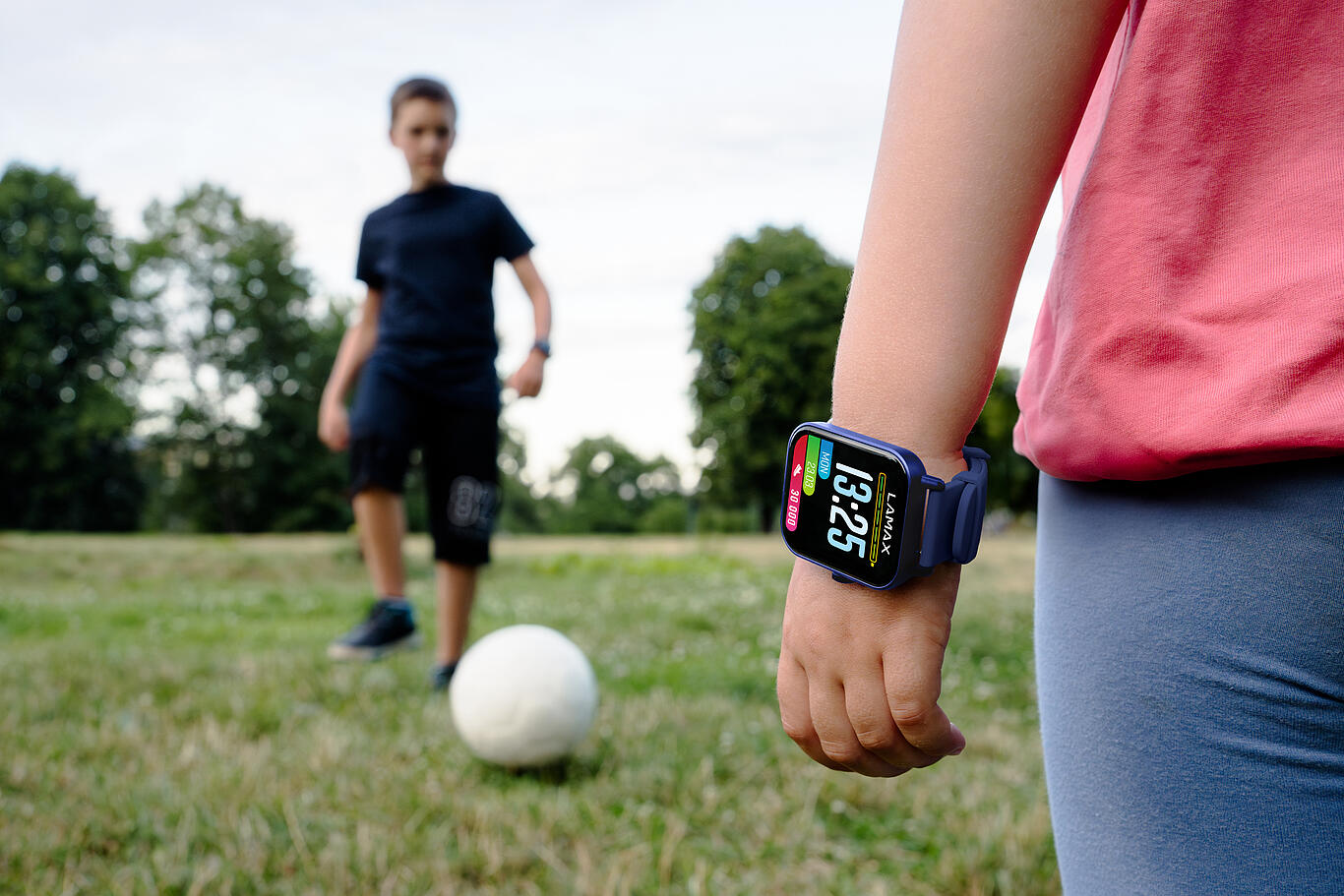
That is what the feature known as School Mode on LAMAX devices is designed for. You set the relevant times in the app according to the child’s timetable, and the watch automatically locks itself during those periods. The watch face remains visible, and only the SOS button stays active. Nothing beeps or vibrates, and games cannot be played. This is exactly what the Ministry’s guidance requires from such a device. At the same time, the child still has the reassurance of being able to call for help in an emergency. Once after-school care is over, the lock automatically switches off and your messages are delivered. This feature is available on watches from the WatchY4 range

What nobody can promise you, however, is that the school will allow them. The Ministry’s guidance is a recommendation, not a legal entitlement. The school rules still take precedence and may include smartwatches in the same category as mobile phones. Anyone claiming otherwise is trying to sell you something. 

What to Look for in the School Rules 

You can usually find the school rules on the school’s website under the documents section. Look for the part dealing with mobile phones and electronic devices. There are three things you need to check. 

First, whether the school has introduced a complete ban throughout the entire time pupils spend on the premises or only a partial restriction with exceptions during breaks. Second, where devices must be stored, because the difference between a school bag and a lockable cabinet is important. Third, whether the rules refer generally to electronic devices or specifically mention mobile phones. If they only mention phones, they may not automatically apply to smartwatches. 

If the rules are unclear, contact the class teacher. Do not ask for an exception. Ask how the school handles smartwatches operating in School Mode and explain what the mode does. Most schools will appreciate you asking in advance rather than having to deal with the issue after the child’s watch starts beeping during a test. 

Does the Ban Actually Help? 

Briefly, because this is now a matter of policy rather than practical advice. 

The IRTIS research team from the Faculty of Social Studies at Masaryk University analysed data from 21 countries and reached an uncomfortable conclusion. Bans reduce distraction among pupils, but they also lead to an increase in classroom misbehaviour. These two effects cancel each other out. As a result, there is no measurable impact on mathematics performance. The researchers also found no difference in cyberbullying or signs of online addiction between schools with and without bans. 

What matters most for children’s well-being, according to the researchers? Whether their parents talk to them about the online world. Not whether their school has introduced a ban. 

FAQ

Is the mobile phone ban in schools already in effect? 

No, there is currently no nationwide ban. Since January 2026, schools have been allowed to restrict or prohibit the use of mobile phones through their own school rules, and around 93% of them already have some form of regulation. The government amendment introducing a nationwide ban is still only a proposal, with a proposed effective date of 1 September 2027. 

Can a first-grader wear a smartwatch at school? 

A child may carry or wear one because the law targets the use of devices, not carrying them. Whether they can keep the watch on their wrist during lessons and in what mode is determined by the rules of the individual school. Smartwatches are classified as electronic devices in the same way as mobile phones. 

Can a teacher confiscate a child’s watch or phone? 

Temporarily, yes. Permanently, no. A school may take away a device only for the time strictly necessary and no longer than until the end of the school day. It must then return it. The school may not inspect the contents of the device, and it is responsible for any device that has been handed over for storage, including any damage that occurs. 

How can I contact my child if their phone has been put away? 

You can contact them through the school office, their class teacher or after-school care. These channels always remain available. Another option is a smartwatch with an SOS button that stays active even in School Mode, allowing the child to call for help in an emergency during the school day. 

Before the School Year Begins 

A great deal could still change in the legislation before September 2027. What will not change, however, is that your child’s everyday school experience is determined by the document published on the school’s website and by the person teaching them. 

So before the school year begins, do two things. Read the school rules and contact the class teacher if anything is unclear. Ten minutes of effort will tell you more than half of the headlines. 

Then all you can do is hope your first-grader manages to find their way to the school canteen. 

Čitanje sljedeće

What to Pack for Summer Camp? 5 Things Kids and Parents Will Thank You For